
Wake Forest Expands Leadership in Neuroarts Through Global Collaboration, Community Partnership, New Research Investments, and Prestigious Recognition
January 15, 2026
At Wake Forest, we believe that creativity, human connection, and scientific discovery are essential to human flourishing. For more than a decade, faculty across our University have explored how artistic and humanistic expression can enhance brain health, deepen empathy, support aging populations, and strengthen community well-being.
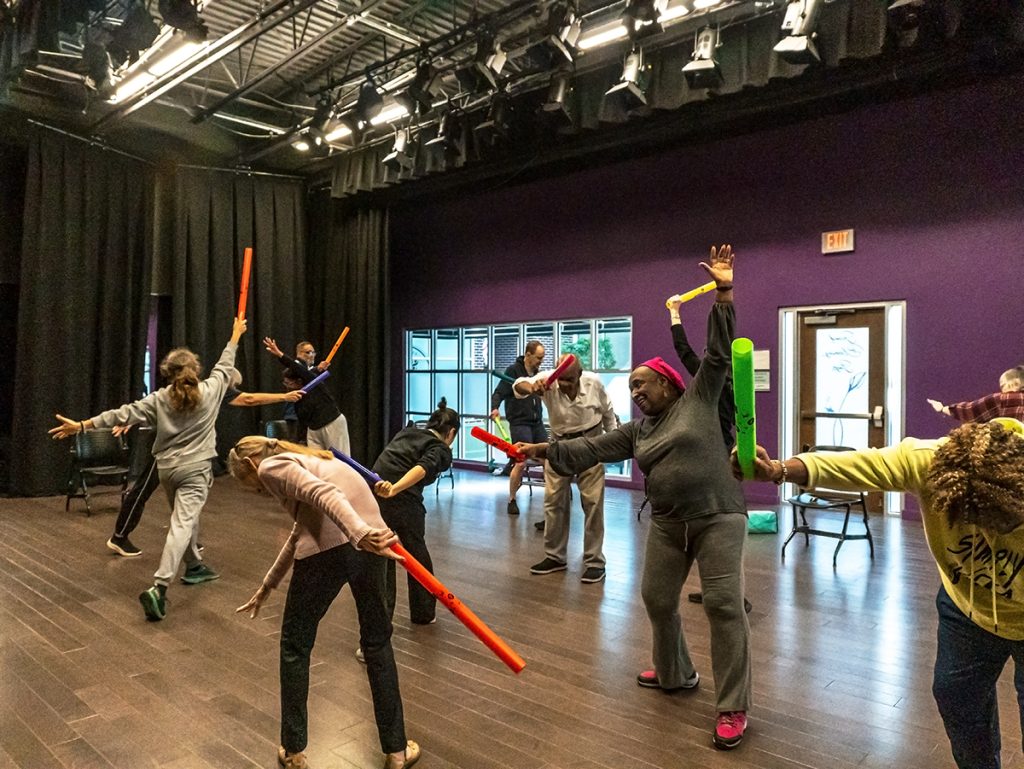
From the IMPROVment® movement curriculum and Arts on Prescription pilot studies to interdisciplinary partnerships across the sciences and arts, our work has helped shape a rapidly growing field known as Neuroarts—a field grounded in evidence showing how the arts positively influence the brain, body, and behavior.
That long-standing work has now reached a pivotal moment, as Wake Forest expands its leadership in Neuroarts through new global partnerships, community-based research, and institutional investment.
“Pioneering a new field takes visionary leaders who are curious, collaborative, and willing to work across boundaries to break down long-standing silos,” said Kim McAllister, Vice Provost for Research, Scholarly Inquiry, and Creative Activity. “That spirit defines NeuroArts at Wake Forest and sits at the very heart of our Neuroscience and Society initiative, one of the University’s areas of academic distinction. Our NeuroArts leaders, Professors Christina Soriano and Christina Hugenschmidt exemplify what is possible when scientific rigor, creative practice, and a deep commitment to human well-being come together. Today, we are pleased to share several important updates that reflect Wake Forest’s expanding role in this global movement, our growing impact in the Winston-Salem community, and the momentum created by our faculty’s leadership and vision.”
Wake Forest Joins the International NeuroArts Blueprint Initiative and the Neuroarts Academic Network
In September 2025, Wake Forest was invited to join a global coalition of academic institutions through the NeuroArts Blueprint Initiative—a partnership led by Johns Hopkins University’s International Arts + Mind Lab Center for Applied Neuroaesthetics and the Aspen Institute’s Health, Medicine & Society Program, with support from The Music Man Foundation. This international effort aims to integrate the arts into mainstream medicine, public health, and society, grounded in research demonstrating the transformative effects of creative expression on health and well-being.
As part of this initiative, Wake Forest is now a participating member of the newly launched Neuroarts Academic Network (NAN), a global consortium of over 35 universities and institutions dedicated to advancing research, education, and workforce development in neuroarts.
The NAN exists to:
- Connect universities and programs already leading in neuroarts
- Encourage new research collaborations and training programs
- Build sustainable career pathways that unite the arts, health, and science
- Share best practices and address core challenges facing this new discipline
- Establish neuroarts as a rigorous, sustainable academic and professional field
Wake Forest contributes to the Network through the leadership of Reynolds Professor of Dance Christina Soriano and Professor of Neuroradiology and Radiology Jonathan Burdette, both members of the NAN Working Group. Through this global partnership, Wake Forest joins scholars, clinicians, and artists around the world who are shaping a paradigm shift: embedding the arts into health care, community well-being, and society as a whole.
This global affiliation reinforces what our campus has long demonstrated—that Wake Forest is poised to help define a new chapter of interdisciplinary research and practice that improves lives and promotes well-being.
“The Neuroarts Academic Network is a key strategic partner with the Advocate Health Neurosciences National Service Line, where clinical care delivery, education and training, research and innovation converge to improve care delivery for both individual patients and society more broadly,” said Dr. Jennifer Sullivan, Leader and Vice Chief Academic Officer of the Advocate Health National Service Lines. “We are thrilled to partner with the Blueprint both in the academic network and as a NeuroArts community partner in North Carolina and Georgia. When the arts power science and science powers the arts, the human condition improves exponentially.”
Announcing the Arts, Health Care, and Humanities in Action Symposium
On Friday, February 13, 2026, Wake Forest will join community partners from across Winston-Salem and North Carolina in hosting the Arts, Health Care, and Humanities in Action Symposium at the Intergenerational Center for Arts and Wellness at Senior Services, Inc.
The symposium brings together artists, scholars, healthcare and human services professionals, clinicians, patients and service recipients, funders, and community leaders to explore the future of arts-based interventions as supportive tools in North Carolina’s health care, human services, and higher education systems.
The event builds on the Winston-Salem Arts Council–funded Arts-on-Prescription pilot study, an innovative partnership connecting the Intergenerational Center for Arts and Wellness, the Arts Council, Wake Forest faculty and staff, the Wake Forest University School of Medicine, and independent teaching artists. Participants will hear findings from this local pilot as well as insights from the New Jersey Performing Arts Center’s Arts Rx Program, which inspired the project.
Organizers are honored to welcome Keynote Speaker Aly Maier Lokuta, Assistant Vice President for Arts & Well-Being at NJPAC. An influential voice in the field, she has led major public arts initiatives, contributed to the first U.S. Social Prescribing pilot (CultureRx), and co-authored the Arts on Prescription Field Guide. Those who are interested in attending the symposium should contact Christina Soriano at sorianct@wfu.edu.
Together, the symposium and the Blueprint partnership reflect a shared belief across institutions, communities, and cultures: that creative expression is a vital component of human health, resilience, and belonging.
Establishing the Wake Forest Neuroarts Lab
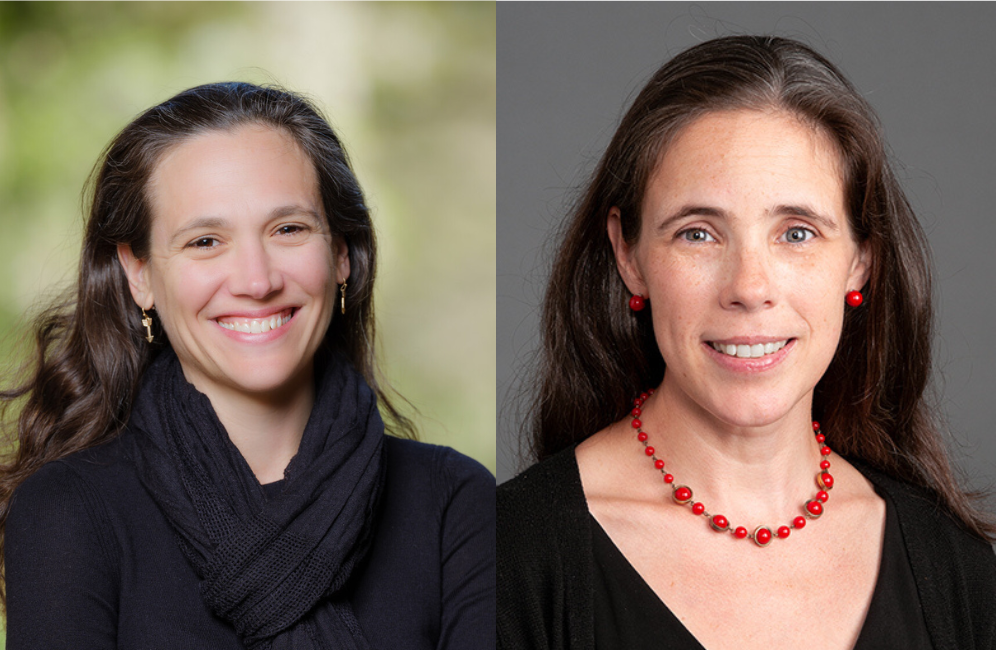
To advance this work, Wake Forest is pleased to announce the creation of a Neuroarts Lab, supported through the Strategic Framework. This new interdisciplinary hub builds on more than a decade of faculty innovation, including the nationally recognized work of Christina Soriano, Christina Hugenschmidt, and their teams in arts and aging research.
“The institutional investment in the Wake Forest Neuroarts Lab adds momentum to the incredible expansion of research and collaborations happening in Winston-Salem, Charlotte and across the state,” said Hugenschmidt. “We are excited to initiate new projects and collaborations that will change the narrative around scholarly research and creative work, making both more accessible to our community.”
The Neuroarts Lab will:
- Investigate the health effects of engagement with the arts using diverse study design
- Support and expand Arts-on-Prescription research
- Grow interdisciplinary partnerships with faculty across Wake Forest University and the School of Medicine and the Advocate enterprise
- Develop new Wake Forest neuroarts performances and programs with community and regional partners
“The expansion of our work in NeuroArts, including the launch of the new Neuroarts Lab and our involvement in the International NeuroArts Blueprint Initiative, perfectly embodies the truly interdisciplinary spirit of Wake Forest. By deliberately weaving together neuroscience, arts practice, humanities-based inquiry, and community partnership, we are defining a new chapter of research and practice that transcends traditional silos,” said Dr. Jackie Krasas, Dean of the College and Graduate School of Arts & Sciences. “This momentum demonstrates our faculty’s visionary expertise and reinforces Wake Forest’s role in shaping an emerging field that promises to improve lives both locally in Winston-Salem and on the global stage.”
Celebrating Global Recognition for Wake Forest’s Neuroarts Leadership
We are proud to share that the Wake Forest Neuroarts Lab was selected as one of six global finalists for the 2025 Legacy Award—part of the Global Leaders Institute’s (GLI) Global Arts Prize. Chosen from more than 300 initial applicants from around the world, this recognition underscores the promise and impact of our interdisciplinary work and the dedication of our faculty, students, and community partners.
The GLI’s Global Arts Prize is an annual award that honors cultural organizations advancing innovative approaches to the role of arts in society.
Central to this recognition is the visionary leadership of Christina Soriano, whose research brings together neuroscience, dance, aging studies, and creative engagement to improve cognitive health and well-being in older adults. Her participation in the Global Arts MBA helped broaden and scale this work, expanding its reach across the Wake Forest ecosystem and beyond.
“Being named a finalist reflects the powerful momentum behind Neuroarts at Wake Forest and highlights our University’s leadership in shaping this emerging field,” said Soriano. “I look forward to future conversations with the Buck Foundation and the Global Leaders Institute about expanding the impact of our work together.”
Together, these milestones signal a future in which Wake Forest continues to shape how the arts and sciences work together to advance human health, learning, and connection.
“It is with great pleasure that I congratulate Wake Forest on its ongoing commitment to the field of neuroarts, which is at the intersection of neuroaesthetics, the arts, behavioral science, technology, and culture,” said Susan Magsamen, Co-Director of the NeuroArts Blueprint Initiative, and Director of the International Arts and Mind Lab Center for Applied Neuroaesthetics at Johns Hopkins University. “Wake Forest’s investments in rigorous and innovative neuroarts research, workforce development through academic programs and their new role in the Neuroarts Academic Network, and community engagement including through the Community Neuroarts Coalitions network, is yielding well-deserved recognition for their leadership and foresight. I am excited to partner with Wake Forest as we deepen our collaborative efforts, leading to the continued development of the field of neuroarts and initiatives to advance the health and well-being of individuals and communities alike.”